(OSV News) - "Are you saved?"
That's a question often heard from well-meaning Christians who want to help others know Jesus Christ. As Catholics whose faith is centered in him, we can appreciate their good intentions and admire their willingness to talk about God.
Even so, we may have trouble understanding what their question is really all about. What exactly do people mean when they talk of being already "saved"?
Most often, Christians asking this question view salvation as a past event that took place when they made a confession of faith in Jesus as their personal Lord and Savior. This act of faith, they believe, now guarantees them a place in heaven, no matter what they may do for the rest of their lives. They will never have to face the punishment of hell for their sins.
The teaching of the Catholic Church helps us understand that this is actually a mistaken notion of salvation. Jesus Christ came to give us much more than a kind of eternal "fire insurance policy." Salvation in the fullest sense is an ongoing process that won't be complete until after we die. In the meantime, it's still possible to turn away again from God.
When someone asks us, then, whether we're "saved," perhaps the best short answer is this: "Well, I'm doing what the Apostle Paul tells us to do in the Bible: I'm 'working out' my salvation day by day" (see Phil 2:12).
If we want to follow up on that statement, we can assure the inquirer that we do in fact have faith in Jesus Christ, that we recognize him as our Savior and Lord, and that our goal is to be counted one day among the saints in heaven.
But why end the discussion there? If you want to take it a step further, try this approach. Say, "Now I have a question for you: We both know that Jesus saves us from sin. But what are we saved for?"
This query shifts the focus of the conversation. Exploring the answer together can help the other person grasp more fully and accurately what it actually means to be saved.
We make choices every day that draw us closer to God or lead us farther away from him. That's why simply believing in Jesus isn't enough. Friendship with God, like friendship of any kind, is more than just getting acquainted. It involves making a series of choices to love, over the long term, so that a committed relationship grows.
Faith is useless, then, without good works. God must have our active cooperation, because both our minds and our wills - the full likeness of God - must be renewed if we're to be saved in the end.
If you talk over these points with Christian friends who ask whether you're saved, you could open up for them a whole new way of thinking. But even if the conversation ends after your first reply, the time you've spent thinking about what salvation really means can deepen your faith and bring you closer to God.
Paul Thigpen was a retired theology professor and a bestselling author. He died in February 2006.
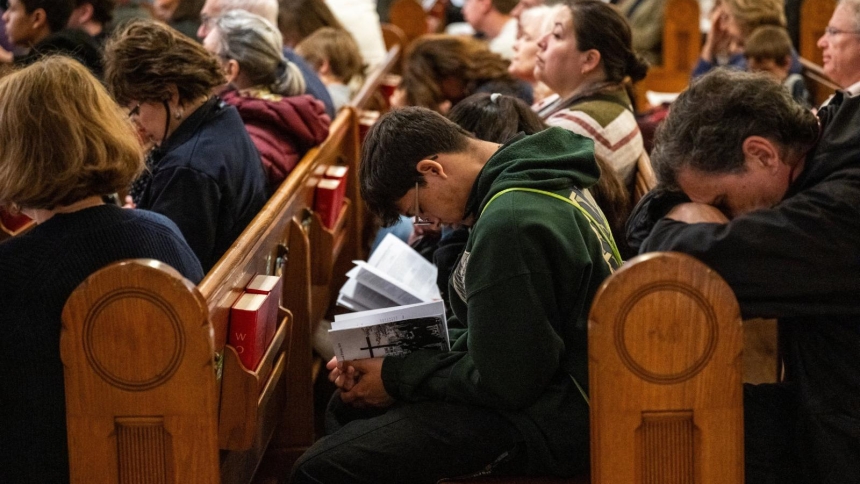
Caption: Worshippers pray inside St. Patrick Catholic Church following a Way of the Cross procession on Good Friday in Washington April 3, 2026. (OSV News photo/Annabelle Gordon, Reuters)