“You are the body of Christ, and each one of you in your own way is part of it.” – Corinthians 12
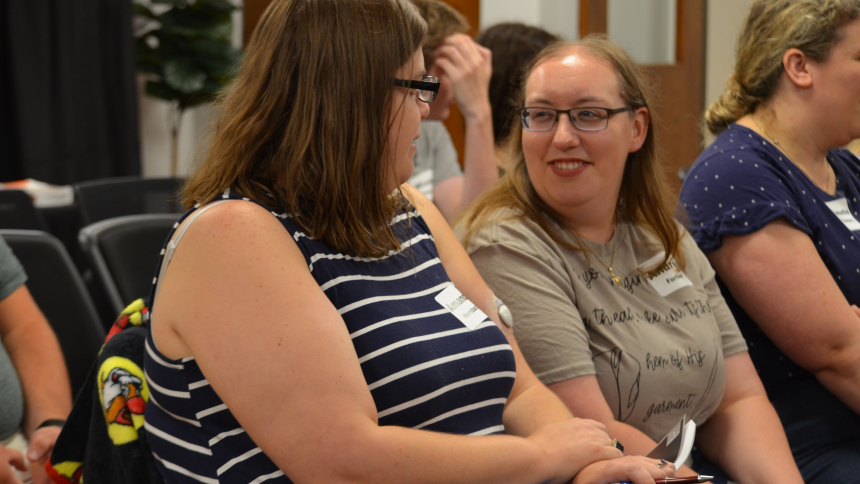
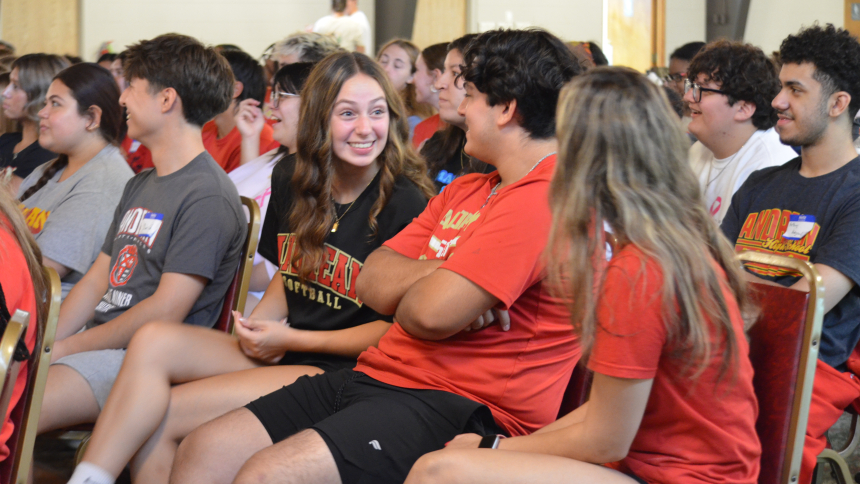
EAST CHICAGO – The Catholic Church encourages the faithful to look at each other through Christ’s eyes. How does one do this? What does that look like? Those involved in ministering to the Hispanic communities of Northwest Indiana recently gathered to reflect on who they serve and how they should serve during a recent leadership formation event.
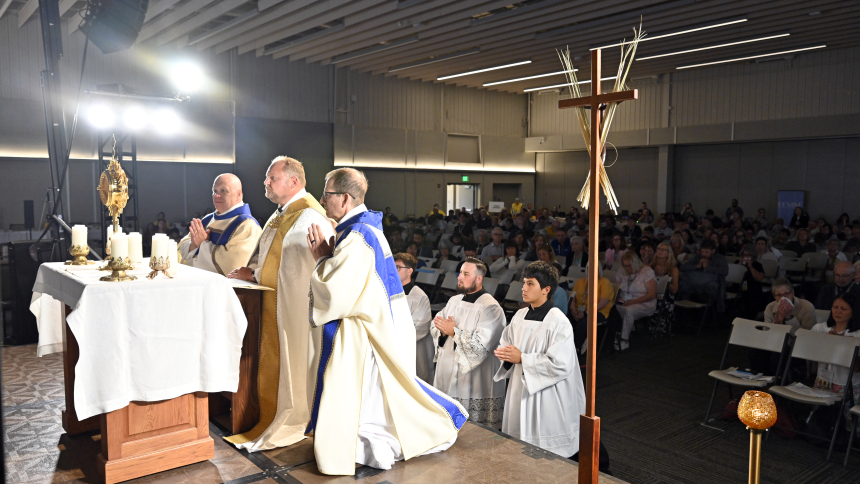
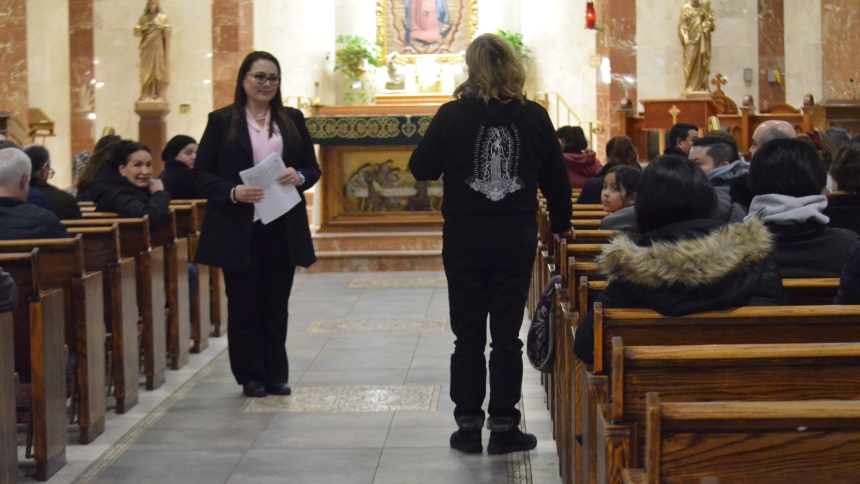
Claudia Sadowski, Ph.d., led a presentation entitled “Servicio y Liderazgo Pastoral” following the Saturday evening Mass on Feb.7 at Our Lady of Guadalupe in East Chicago. The diocesan intercultural ministry coordinator greeted those who arrived, speaking in Spanish for the duration of the evening. As she began her speech, she took a moment to thank pastor Father Juan Diego, A.I.C., for the opportunity to host the meeting at the parish.
“This is something new that the diocese is trying to do,” Sadowski said. “We not only want to hear from those who visit the Pastoral Center, but this gives us the opportunity to go to the parishes and be with the people. Those who know me know that I like to be among the people, to know more about the needs and learn how the local Church can serve them better.”
Sadowski organized her talk, illustrating the Ver Iluminar Actuar Celebar / See Illuminate Act Celebrate model. The pastoral method was adopted by the Catholic Church during the Second Vatican Council for discerning reality in the light of faith. The method looks at the reality of the Hispanic community through the eyes of Christ, illuminates service through Scripture and teaching, and promotes concrete actions within families, parishes and society.
“The key idea is that we don't look to criticize, but to discover how God is already acting in it,” Sadowski said.
Taking a closer look at the Hispanic population, Sadowski provided statistics to answer the questions “¿Cuántos somos?” or “How many of us are there?” and “¿Qué desafios encontramos?” or “What challenges do we encounter?
“If we don't know our culture, we don't know where we are going,” Sadowski said. “I've never been on a plane not knowing where I was going before I got there. It would be difficult to arrive at an unknown place,
without knowing the language, without knowing the culture.”
The Hispanic and Latino population in the United States surpassed 62 million people in the 2020 Census and continues to grow. According to estimates from the Fifth National Meeting of the Hispanic Pastoral Ministry, Hispanics constitute a significant portion of the U.S. Catholic population. The Hispanic presence in parishes is widespread: 4,479 parishes offer Mass in Spanish, and 2,760 parishes have a Hispanic/Latino ministry, even if they do not offer Mass in Spanish.
In Indiana, Hispanics represent approximately 9.1% of the state's population, according to recent data from the U.S. Census Bureau (July 2024). This means there are more than 630,000 people of Hispanic origin in the state. In several Indiana cities, such as East Chicago and Hammond, Hispanics make up a larger proportion of the local population.
Hispanics are a growing part of the Catholic Church in the U.S., influencing parish life, sacraments, and youth communities in particular. Many diocesan ministries, such as those in Indiana, have developed specific programs to serve Hispanic youth, families and migrants. At the diocesan level, the Diocese of Gary does have a Hispanic Ministry Advisory Team.
The diocesan advisory team representing the Hispanic ministry, Sadowski said, has a list of ten priorities from evangelization and faith formation to accompanying Hispanic and Latino families and providing support for immigrants.
“I wanted to learn how I could serve better,” she told the audience. “Through prayer, we started forming these teams. They are my advisors. They inform me what needs to be done, and then we look for solutions to show support where it's needed.”
Sadowski explained that one of the first objectives made by the team was to serve the Church’s immigrant brothers and sisters in the field. Therefore, it began to provide outreach to migrants working on farms within the Diocese of Gary.
Focusing on the diocesan parishes, Sadowski shared a list of those that offer Masses in Spanish. Those churches include All Saints in Hammond, Holy Name of Jesus in Cedar Lake, Our Lady of Guadalupe in East Chicago, Our Lady of Perpetual Help in Hammond, Queen of All Saints in Michigan City, Sacred Heart in Whiting, St. Casimir in Hammond, St. Edward in Lowell, St. Francis Xavier in Lake Station, St. John Bosco in Hammond, Holy Family in LaPote, St. Joseph the Worker in Gary, St. Margaret Mary in Hammond, St. Mary in East Chicago, St. Patrick in East Chicago and St. Paul in Valparaiso.
Taking a more personal tone, Sadowski continued the lecture by acknowledging the many challenges people may face, such as starting a new job, raising a family, coping with feelings of despair and isolation and dealing with financial difficulties. She also noted the issues particular to those of Hispanic and Latino backgrounds, like immigration status and dangers in places of origin.
Sadowski reminded those gathered that their true identity resides as sons and daughters of God. She explained they have a name that means something valuable, and are people who are generous, genuine and faithful.
“We are called to be a light to others,” she said. “That doesn't mean we don't have problems. Even though we might not see it, God has put in our hearts a force of leadership that goes beyond what we can imagine. He has given us everything we need to move forward.”
Citing Sacred Scripture, Sadowski shared three Bible passages, providing context as to how Jesus asked his followers to live. 1. Jesus asked others to serve, not to dominate. In Mark 10: 43-45 He said, “Whoever wants to be the greatest among you must be your servant... know that the Son of Man did not come to be served, but to serve, and to give his life as a ransom for many.” 2. People are to serve with humility and love. Galatians 5: 13-15 reads, “Our vocation, brothers and sisters... can be summed up in one phrase: Love your neighbor as yourself... Serve one another in love.” The Gospel also gives advice for what the attitude of a true servant should be. In Peter 4:10-11, the apostle writes Jesus’ words, “Each of us should use the gift we have received to serve others, and in this way we will be good stewards of God's various gifts.”
Offering more information on the subject of service, Sadowski provided text from the Catechism of the Catholic Church: Christ, King and Lord of the universe, became the servant of all. For Christians, to reign is to serve Christ, especially in the poor and suffering (CIC 786). The paths of mission follow in the footsteps of Christ: poverty, obedience, service, and self-giving. (CIC 852). The differences between people are part of God's plan. Each person receives talents to use in service to others (CIC 1937).
These references were used to guide short moments of reflection as attendees were asked to consider “How does my leadership style help others encounter Christ?” and “I am using my talents for the common good?”
Sadowski gave some tips for those who want to grow stronger in their faith. Among the suggestions she shared were asking God for guidance, developing a plan, setting healthy goals and maintaining an open mind and a humble heart.
“Let's go to the source of love, which is God,” Sadowski said. “Before planning, one must look with the eyes of Christ.”
Editor’s Note: The Diocese of Gary is organizing a mission trip to Mexico City Oct. 8-13. For more information, visit https://dcgary.org/2026-missiontrip or call 769-9292.