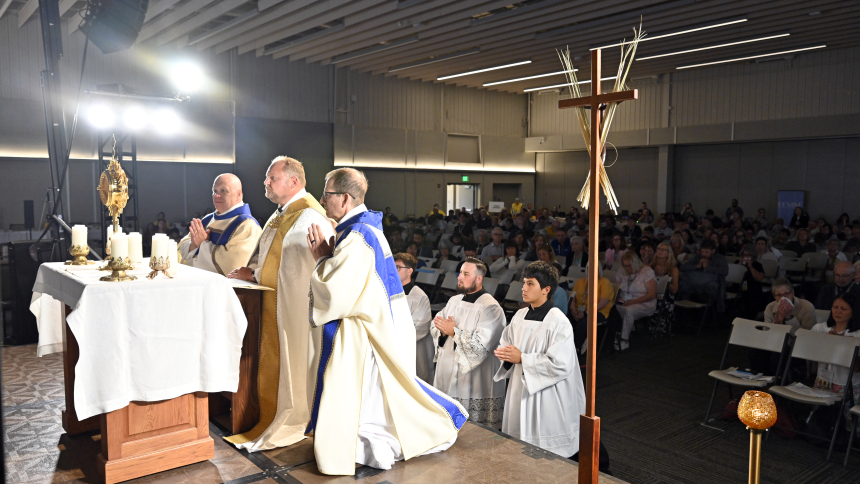
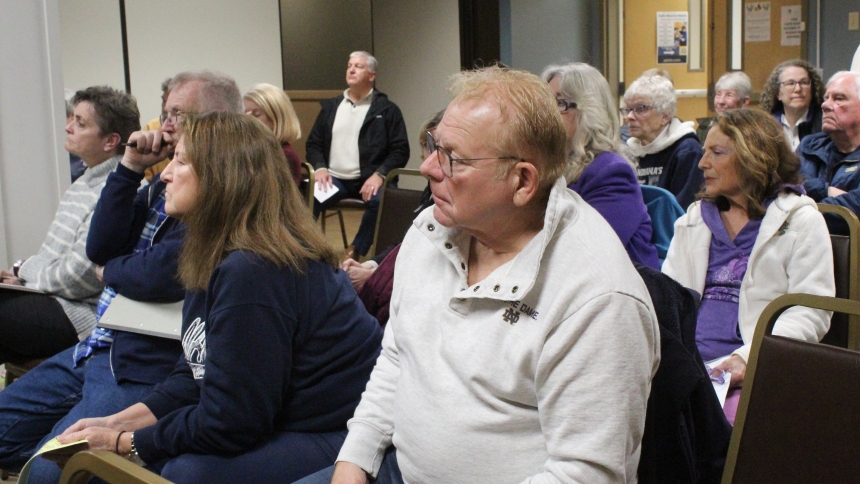
VALPARAISO – A priest, an attorney and a funeral director walk into a bar … make that a packed room at St. Teresa of Avila Catholic Student Center, where individuals, couples and families came to learn – no joke – about the practical side of End of Life Planning on April 1.
Father Jacob McDaniel, chaplain at St. Teresa of Avila, opened the discussion with an overview of the Catholic understanding of death and Church’s teachings on the key themes of the dignity of the body, communion of saints and intercessory prayer. He said the purpose of funeral rites in the Catholic Church is “prayer, consolation and hope in the Resurrection.”
The Four Last Things facing Catholics, Father McDaniel added, are death, judgement, heaven and hell. “When your soul separates from your body, you die,” he said. “Your soul faces immediate particular judgement,” and enters into hell, is purified in purgatory to prepare for heaven or enters straight into heaven.
He listed the three parts of Catholic funeral Rites as the vigil service, or wake, the Funeral mass and the Rite of Committal, which includes the blessing of the grave or columbarium and prayers for the deceased’s final rest.
While cremation is now permitted in the Catholic Church, it should take place after the Funeral Mass, and the cremains should be buried, never scattered.
Father McDaniel said that appropriate music and sacred Scripture should never be selected at random, but from a parish’s suggested packet, which is available at saintt.com/funeral in the case of St. Teresa of Avila.
“The emphasis is on hope and trust in God’s mercy and Resurrection,” he said.
Catholics should receive the Sacrament of the Anointing of the Sick while still conscious to obtain spiritual healing, strength and, if needed, the forgiveness of sins, “but if a person is not conscious, they can still be anointed,” he stressed. “Sometimes a caregiver fears calling a priest (to administer the Anointing of the Sick) because they think it will scare the dying, but the prayers do not reference death, and usually it is the caregiver who is afraid.”
The person who is near death “should be gently and truthfully prepared for death so they can spiritually ready themselves,” Father McDaniel added.
Organ donation is morally acceptable if it respects the dignity of the donor and is done freely and ethically, he said.
Death is not the end, the priest noted, since “Christians have hope in the resurrection of the body and eternal life with God,” said Father McDaniel.
Addressing legal considerations at the end of life, attorney Rebecca Billick explained the Power of Attorney, which should be chosen “so they can write checks, pay the mortgage and handle other financial and legal obligations for a person who may become incapacitated. She advised against naming all of your children – “They will not agree,” and suggested a first “or” second choice, not an “and.”
Billick advised setting up a trust to ensure “nothing has to go through the court." “With a trust, you can control your estate from the grave by designating how property is distributed long after your death. A trust can be 'born' when you die, and it is not necessary to fund the trust before you die," she explained.
She suggested choosing an executor who is not a beneficiary, whether a relative, friend, attorney, bank or accountant. She also discussed using a Transfer on Death Deed for a home and a beneficiary designation form for your car.
“You do not ever want a minor to receive money outside a trust” she added, since such a bequest will require a guardianship until they reach age 18.
She also advised establishing a Special Needs Trust for a beneficiary who has a disability, in order that they not lose their government benefits.”
The final speakers, focusing on the most practical aspects of dying, were Michael Newhard, owner/funeral director, and Alice Kyle, pre-planning consultant, both of Bartholomew Funeral Home in Valparaiso and Newhard Funeral Home in Westville.
Advanced Planning, they explained, involves detailed planning and payment of funeral services and the selection of merchandise, such as a casket, vault, clothing, urn and stationery, among other items. A record is made and kept by the funeral home to go into effect upon death.
“You can get what you want, inexpensive or more expensive, and eliminate inflation,” said Newhard. “Your money is protected in an irrevocable trust, and can’t be tapped later for nursing home costs, for instance.
“Children will like it, because there will be no arguing,” said Kyle. “You will have given them a great gift of love.”
Kathy Starcevich, a parishioner at St. Patrick, came from her Chesterton home “because we are dealing with these issues right now for a family member, and we are in our 70s, too,” she said of she and her spouse. “There was so much information; Father McDaniel’s words clarifying the Church’s position on the sacraments and all of it was the perfect way to begin the program.
Paul and Pamela Thomas, of Valparaiso, are active at St. Teresa of Avila, Paul said he most appreciated learning the difference between wills and trusts, as well as other legal aspects of preparing for death. Together for more than 50 years, the spouses have faced end-of-life issues with their parents, added Pamla, and had a scare two years ago when Paul became ill.
“We have been talking and talking about these things, and we want to be prepared,” said Pamela Thomas.
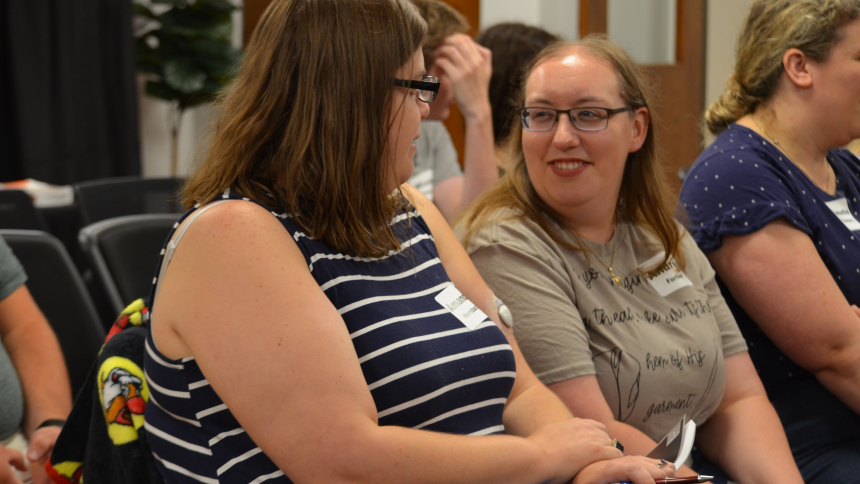
Caption: Pamela and Paul Thomas, parishioners at St. Teresa of Avila Catholic Student Center in Valparaiso, listen to staff members from Bartholomew Funeral Home discuss the benefits of advance planning when it comes to funerals. They were among a standing-room-only crowd attending the End of Life Planning program hosted at St. Teresa of Avila Catholic Student Center in Valparaiso on April 1. (Marlene A. Zloza photo)