Father strives to create awareness and reduce stigma surrounding suicide
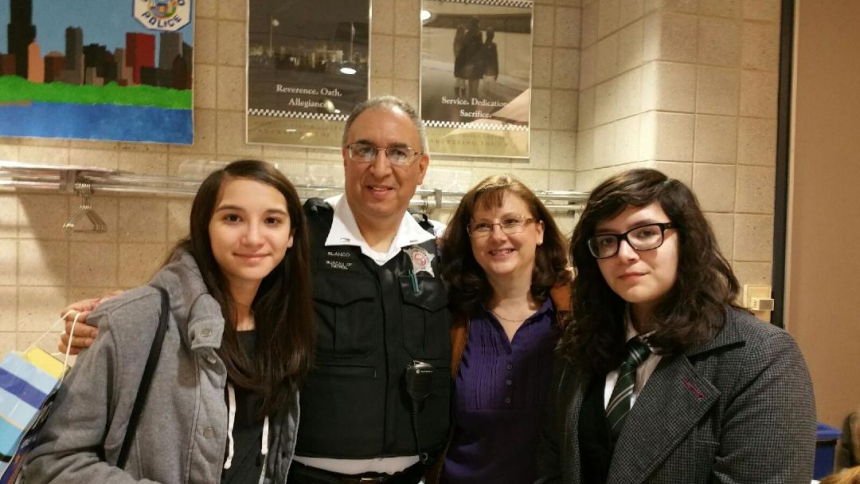
After a difficult birth involving their first daughter, Katie, Dave and Sheila Blanco, of Chicago’s Hegewisch neighborhood, felt blessed to welcome a second daughter. While their oldest daughter leaned toward following the rules, Carli was more willing to take risks. She was also very smart. So intelligent, in fact, that teachers would occasionally give her extra work to expand her knowledge. Dave Blanco believes her intelligence may have been the reason why she started to be bullied by her peers.
“She wasn't standoffish,” he said. “She actually tried helping people. She was always into helping other kids because she understood what it was like to be bullied.”
As Carli prepared to enter her eighth-grade year, the family decided to move her away from those children who were being unkind, and she transferred to St. John the Baptist Catholic School in Whiting to continue her education.
“The kids there – They were wonderful. I mean, they really knew what was going on,” Blanco said. “They tried to really reach out to her, but by that time, she didn't trust any kids her own age. The only people she would talk to were adults.”
Carli’s birthday was March 17, St. Patrick's Day, and she mentioned to some of her classmates that she would not be alive to see her birthday. They shared the concerning comments with the teacher. Her parents were notified, and they decided to take her to the hospital, where she could receive some intensive counseling.
Blanco admits he didn't know how bad the bullying was at the time. He and his wife learned that she was being bullied on social media and on her cell phone. Blanco estimates she had 30 kids picking on her and sending messages at various hours of the day and night.
“I don't even think these kids were aware of what the other kids were doing because they were individual messages on a phone, including a couple of kids who actually encouraged her to end herself,” Blanco said.
“She just didn't seem to have that strength to fight back,” he added. “We were trying to help her as much as we could.”
According to Blanco, a shortage of mental health counselors and doctors led the psychiatrists to put her on medication while she waited four weeks for an appointment.
The day Carli passed, Blanco said she seemed quite happy, and she suggested the two of them go out to eat and visit a bookstore.
“We were adventure partners,” he said. “She was a daddy's girl. We did so many things together. We went to museums together, and Comic-Con together. Not that my daughter Katie didn't go with us, but we spent a lot of time doing things together; just the two of us.”
They both also enjoyed British television and the stories of Sherlock Holmes. Carli’s love of the mystery-solving detective even earned her the nickname Sherlock.
Blanco agreed to the outing for food with a stop at the bookstore. He told Carli to “go get ready” and headed downstairs for a moment to take care of laundry… And that was all it took. He came back upstairs to find she had located his keys and unlocked a gun, firing a lethal shot while outside on the driveway.
Members of the police department arrived at the home quickly, but Carli was gone. Blanco felt an immediate sense of guilt. In that intense moment of grief, he picked up the gun to harm himself, but an officer fortunately grabbed his wrist quickly enough that the bullet only grazed his head.
“It's a pain that no one ever should experience,” he said. “It's horrible losing a child in any kind of way. You're not supposed to bury your children. It's just not supposed to happen. I don't care if it's a suicide, illness, traffic accident, murder – you're not supposed to lose your kids.”
Blanco never blamed God for his daughter's death. He knew it wasn't God's fault. He explained his belief was always, “That God gave us two unbelievably loving gifts: life and free will. And whatever we did with that free will was on us, not Him.”
While Blanco could have turned away from the Catholic Church and God, he was able to maintain his faith. Shortly after her death, he was confronted by a member of the clergy who believed that his daughter could not be in heaven. Later, a different priest clarified the current Catholic teachings on suicide.
Blanco said, “Thank God the younger priest from the new school she was at said, ‘No, no, no. The Church doesn't believe that anymore.’ They used to practice that, hoping it would prevent people from dying by suicide. It didn't work. The priest said the practice in the Church now is that they recognize suicide as an illness, just like cancer or diabetes, and he said, ‘She's with God now.’”
The death of Carli was not only hard on the family but was extremely difficult for her friends and classmates. At the wake, her bullies apologized and expressed feelings that it was their fault. Nine years later, Blanco has not turned off Carli’s phone because some still send messages like “I'm sorry” and “Thinking of you.”
Even though she was only enrolled at St. John the Baptist for a short time, in her honor, the school painted and added a plaque to the bench where she always sat and read during recess. And Carli’s parents were invited to attend the graduation ceremony to receive her diploma.
Today, Blanco continues to donate money to the school every year to be used toward mental health emergencies. Unlike public schools, he noted, private schools don't have counselors and parents don't always have the funds to get their children the help they need.
Blanco explained that the grief never goes away and the pain will never go away, but “you learn to manage the pain.” He said it helps to know that he will see her again one day in heaven and stated that he has felt her presence on many occasions.
Blanco acknowledged he still has moments of guilt and feels blessed for the support and strength of his wife. The couple will soon celebrate 30 years of marriage.
“My wife never blamed me,” he said. “She might have blamed herself, but she never blamed me. She's a remarkable woman; very strong. She's been there for me, and I try to be there for her.”
Blanco has found it beneficial to attend the LOSS (Loving Outreach to Survivors of Suicide) meetings at St. John the Evangelist in St. John. He appreciates that the program is available and wishes more people would take advantage of it.
He said, “I get to go and spend time once a month with people who are going through the same thing I'm going through, and it gives them and me an avenue to express my feelings, deep feelings that no one else would understand if they didn't have that kind of loss.”
Blanco pointed out that losing someone to suicide is unique because they chose to die. There's also a lot of “what ifs,” such as “What if I had done this?” and “What if I hadn't done that?” Blanco said the support group helps those understand it's not their fault.
Several organizations and individuals have reached out to Blanco because he is willing to talk about losing a child, and most people will not talk about the subject. However, Blanco knows for a fact that Carli wanted him to be outspoken because of a note she left. Two weeks after she was gone, he found a letter on her desk. Toward the end of it, she wrote, “Please try to help other kids from not doing this. Try to find out why they feel the way they do and stop them from doing this.”
As a retired police officer, Blanco stated he saw “the most horrible things you can imagine,” but nothing prepared him for losing his daughter. Having gone through the experience, Blanco shared that comments such as “she's in a better place” were not helpful to him. Instead, he feels it's completely acceptable to tell someone, “I don't know what to say.” He also encourages family and friends to reach out to those dealing with grief instead of waiting for them to reach out. Finally, he stressed that it's important for parents to keep watch over their children even if it means going in their room or looking through their phone.
“I’ll tell Carli’s story, over and over and over again,” Blanco said. “If it even saves or helps one person, it honors her.”
Editor’s Note: A local LOSS group meets on the first Thursday of every month from 7-9 p.m. in the Narthex of
St. John the Evangelist. The church is located at 10701 Olcott Ave. in St. John. For more information, contact Jim and Kris Kazmierczak at 219-690-1268, or call LOSS at 312-655-7283, or email LOSS@CatholicCharities.net.