Faithful to gather for discussion on document released by Indiana bishops
CEDAR LAKE – Earlier this year, the five Catholic bishops of the State of Indiana, Archbishop Charles C. Thompson (Indianapolis), Bishop Kevin C. Rhoades (Fort Wayne-South Bend), Bishop Robert J. McClory (Gary), Bishop Timothy L. Doherty (Lafayette) and Bishop Joseph M. Siegel (Evansville) announced the release of a new pastoral letter, “Integral Ecology: A Sacramental Vision.”
Written during the 2025 Jubilee Year of Hope, the letter is addressed to “brothers and sisters in Christ and all people of goodwill in the state of Indiana.” In it, the bishops share their joy in the Good News of Jesus Christ and offer encouragement rooted in “the hope that does not disappoint” (Romans 5:5).
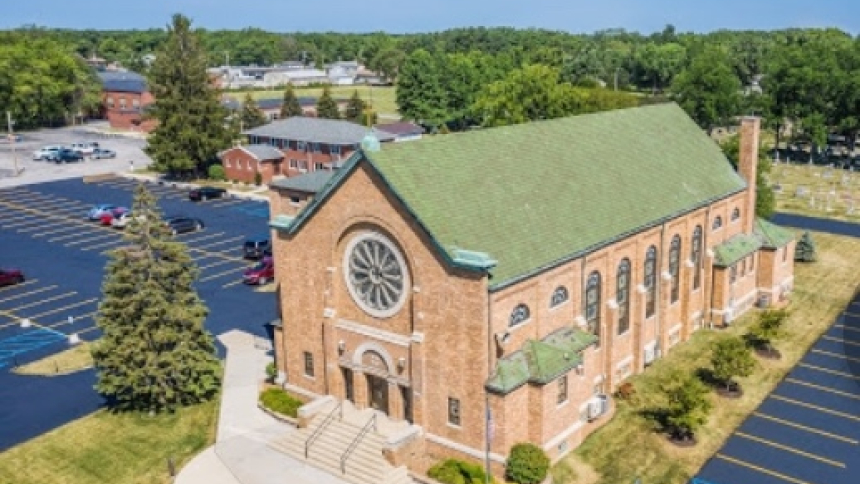
Holy Name of Jesus in Cedar Lake offers monthly intergenerational faith formation for anyone in the parish who wants to attend. The classes are typically attended by parents and children. Its upcoming sessions will be more adult-centered, focus on “Integral Ecology: A Sacramental Vision,” and be open to all who wish to attend. The meetings will take place once a month starting Sept. 15.
Mercedes Austgen, pastoral associate, explained that the church chose this document as its overarching theme for the year. Each session will be designed around the sections of the bishops’ document.
The parish also decided to offer a new time for the gatherings as it wanted to present an additional opportunity for those who don’t drive at night and/or would prefer a quieter setting to be able to participate.
“I believe we need to be looking at our place in the world and realize that we don’t live in a vacuum,” she said. “We need to interact with the world around us so we understand how so much of the life around us relies on a complicated balance of relationships.”
Austgen noted the bishops’ document is “extremely well written, very readable and specific to those of us who live in Indiana.” She appreciates that the bishops looked at poverty and Eucharist and then connected it to ecology.
“It is a great coming together of the past few years in the life of the Indiana Catholic Church,” Austgen said. “I think it will appeal because of the personal nature of the material.”
This offering will take place once a month after the church’s Tuesday noon Mass. A lunch will be provided, and participants will then read a section of the document and have a small group discussion.
Austgen hopes those involved will gain a greater appreciation for all the natural beauty and resources in Indiana and some motivation to explore further how to maintain and protect it. She feels the document takes a common-sense approach to the relationships between farming, industry and conservation.
“I am hoping people will look more closely at how their actions affect everything around them, the people, creatures and plants, and the ecosystems, both good and bad. And finally, I hope people will want to go outside and play!”
The pastoral letter reflects on the social and ecological challenges of the time through a Christian lens of hope. It also builds upon the bishops’ previous teaching on care for creation, including their 2000 pastoral letter, Care for the Earth, issued during the Great Jubilee of the Year 2000.
"Rooted in theology, this pastoral letter is intended to inform the faithful and inspire a deeper appreciation for our environment, especially as experienced in our state of Indiana,” remarked Most Rev. Robert J. McClory, Bishop of Gary. “The Indiana bishops encourage the faithful to reflect more deeply on our state's tremendous resources of air, land and water and to prioritize their protection for future generations."
“Integral Ecology: A Sacramental Vision” invites Catholics and all people of good will to consider a deeper, faith-filled understanding of humanity’s relationship with creation – one that recognizes the world as a gift from God and calls for responsible stewardship grounded in the sacramental life of the Church.
For more information or to register, email mercedes@holynamecl.org or call 219-232-2778. Additional resources about the pastoral letter can be found at indianacc.org/ecology.